Review editionDrafts awaiting scholar review are shown. Not for publication.
AlFitan

The Gharqad Tree Hadith: Botanical Reality, Eschatological Context & Modern Viral Speculations

An objective scholarly and botanical investigation into Sahih Muslim 2922, the eschatological confrontation at the descent of Isa (AS), and debunking viral claims about mass planting in contemporary Israel.

Review BoardAlFitan Research Board
Published Date2026-10-28
Reading Time18 min read
1

1. The Sahih Muslim Narration & Authentic Text

The Authentic Text in Sahih Muslim

In Sahih Muslim (Book of Tribulations, Hadith 2922), narrated by Abu Hurairah (RA), the Messenger of Allah ﷺ said:

«لا تَقُومُ السَّاعَةُ حتَّى يُقاتِلَ المُسْلِمُونَ اليَهُودَ، فيَقْتُلُهُمُ المُسْلِمُونَ حتَّى يَخْتَبِئَ اليَهُودِيُّ مِن وراءِ الحَجَرِ والشَّجَرِ، فيَقولُ الحَجَرُ أوِ الشَّجَرُ: يا مُسْلِمُ، يا عَبْدَ اللهِ، هذا يَهُودِيٌّ خَلْفِي، فَتَعالَ فاقْتُلْهُ، إلَّا الغَرْقَدَ، فإنَّه مِن شَجَرِ اليَهُودِ»

English Translation:
> "The Hour will not be established until the Muslims fight the Jews, and the Muslims will kill them until the Jew hides behind rocks and trees, and the rock or tree will say: 'O Muslim, O servant of Allah, here is a Jew behind me; come and kill him'—except for the Gharqad, for it is the tree of the Jews."

📜 Canonical Status:
This hadith is recorded with the highest degree of authenticity (Sahih) by both Imam Muslim (Hadith 2922) and Imam al-Bukhari (Hadiths 2925 & 2926 in Kitab al-Jihad). Classical scholars unanimously accept its scriptural authority while strictly contextualizing its apocalyptic timing.
2

2. Botanical Identity: What Exactly is the Gharqad Tree?

Classical Lexical Definition

Classical Arabic lexicographers—such as Ibn Manzur in Lisan al-Arab and al-Fayruzabadi in al-Qamus al-Muhit—unanimously define Gharqad as:

«الغرقد: كبار العوسج» — "Al-Gharqad is the mature, heavily tangled, large woody bush of the 'Awsaj (boxthorn)."

Abu Hanifah al-Dinawari, the master classical botanist of the Islamic world, recorded in Kitab al-Nabat:
> "When the 'Awsaj grows thick, robust, densely tangled and prostrate across the earth, it is designated as Gharqad."

Modern Botanical Taxonomy

In contemporary botanical taxonomy, field researchers identify Gharqad primarily with two native arid species:

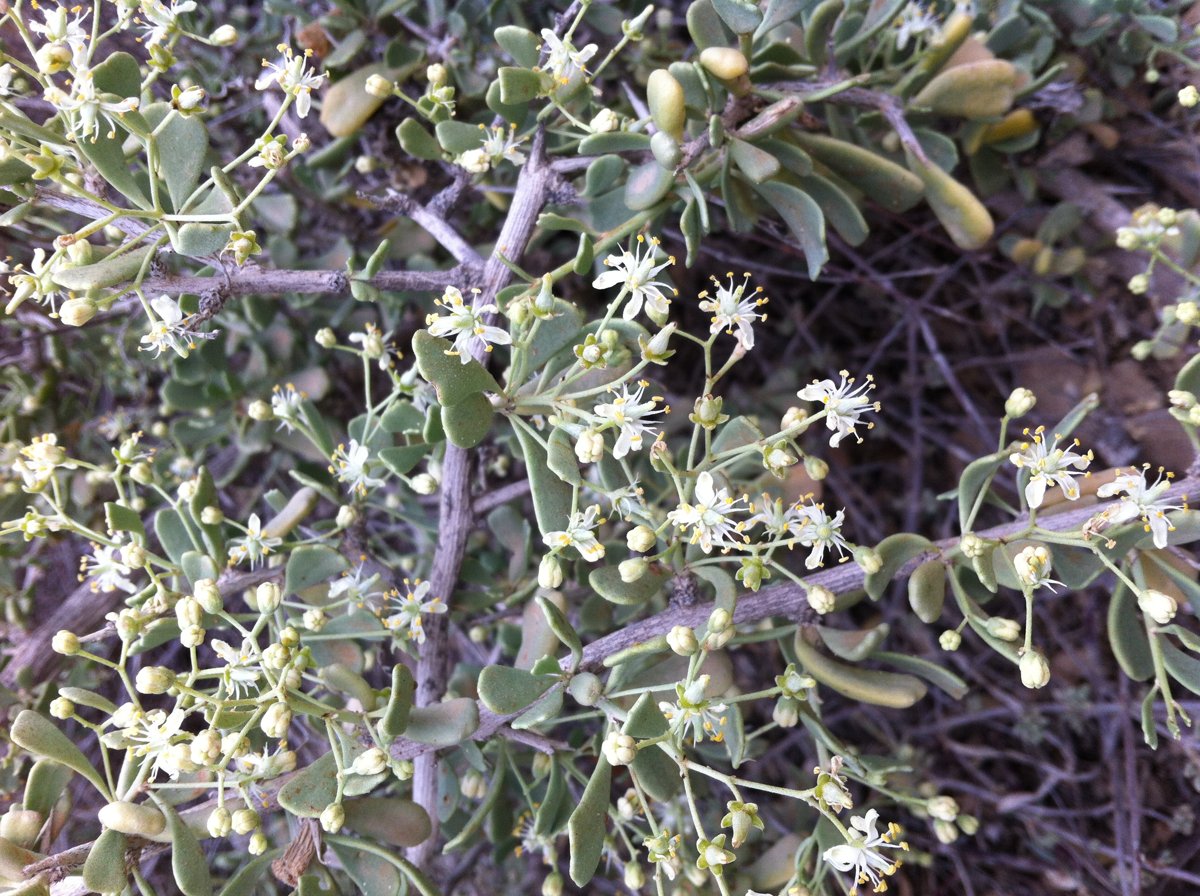
  1. Nitraria retusa (Nitrariaceae family): Known in Arabic as Gharqad or Ghardaq, and in Hebrew as Yamluah. A halophytic, salt-tolerant thorny shrub native to the Dead Sea basin, Sinai, Jordan Valley, and the Negev.
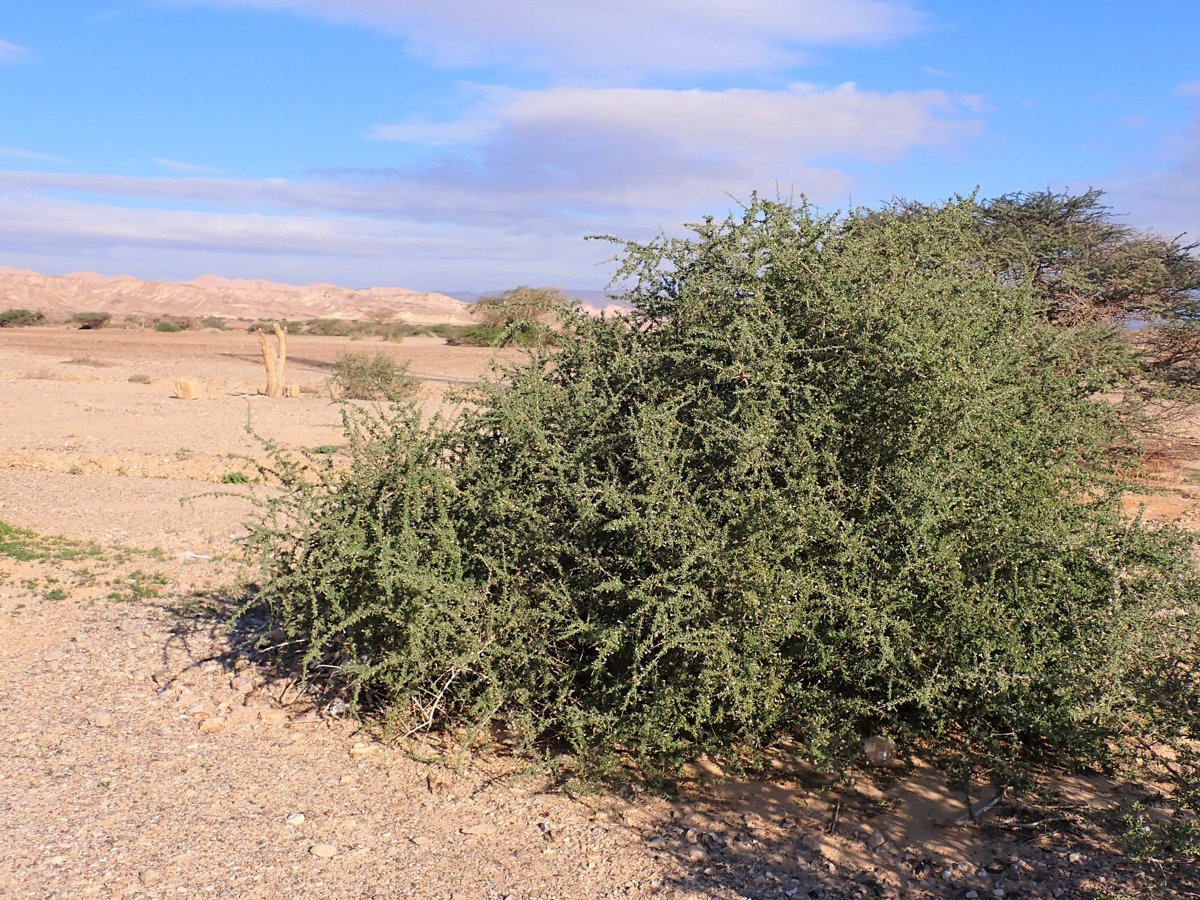
  2. Lycium shawii (Solanaceae family): Arabian boxthorn (al-'Awsaj). A spine-dense, drought-hardy shrub reaching 1–2.5 meters tall, bearing small red berries and aggressive, needle-sharp lateral spines.
Lycium shawii in Negev
Lycium shawii (Gharqad) — Dense thorny shrub growing in the arid Negev Desert.

Low Ground-Level Sprawl: Total Distance Invisibility

A defining physical architecture of the Gharqad tree is that it develops zero bare trunk clearance (0 m clearance).

  • Unlike standard upright trees whose bare trunks leave ground sightlines completely open, Gharqad's rigid, spine-laden branches emerge directly from the root collar at the soil surface.
  • The branches flow and sprawl outward horizontally across the ground, forming an opaque, hemispherical mound 3 to 6 meters wide.
  • Because the lower portion touching the earth is the thickest and most densely interlaced, anyone crouching, sitting, or taking cover behind the shrub is completely shielded from direct line of sight—remaining totally invisible from afar.
Nitraria retusa Ground Architecture
Nitraria retusa (Gharqad) — Ground-level dense branching that completely blocks line-of-sight.
3

3. The Historical Connection: 'Baqi' al-Gharqad' in Madinah

A fundamental historical proof that Gharqad is native across the entire Arabian and Levantine deserts is the sacred cemetery of Madinah: Jannat al-Baqi', historically known as 'Baqi' al-Gharqad' (بَقِيعُ الْغَرْقَدِ).
Imam Ibn al-Athir in Al-Nihayah fi Gharib al-Hadith and Al-Samhudi in Wafa al-Wafa explain that before the Prophet ﷺ chose Baqi' as the resting ground for the Companions, it was a wide vacant plot densely covered with wild Gharqad thorn bushes. When Uthman ibn Maz'un (RA) was buried, the shrubs were cleared, but the ancient botanical name remained attached to the site forever.

4

4. Eschatological Chronology: The War with Dajjal's Army

Classical commentators strictly warn against tearing this hadith out of its apocalyptic context. Classical scholars (such as Ibn Hajar in Fath al-Bari, Al-Nawawi in Sharh Sahih Muslim, and Ibn Kathir in Al-Bidayah wa-al-Nihayah) explicitly explain that this event is NOT a blanket mandate for peacetime violence against Jewish people across centuries. Rather, it belongs to the final apocalyptic confrontation at the descent of Prophet Isa (AS).
As documented in Sunan Ibn Majah (4077) and Sahih Muslim (2944):
1. The False Messiah (Dajjal) emerges from the East and marches toward Jerusalem with an army including 70,000 armed fighters from Isfahan.
2. Prophet Isa (AS) descends at the White Minaret in Damascus, joins the Mahdi and the believers for Fajr, pursues the Dajjal, and kills him at the Gate of Ludd (Palestine).
3. Dajjal's defeated army scatters in panicked retreat; at that miraculous hour, inanimate nature (stones and trees) is granted literal speech by Allah to expose the belligerents of the False Messiah—except the Gharqad.

5

5. The Viral Myth: 'Is Israel Secretly Planting Millions of Gharqad Trees?'

For over two decades, social media posts, sensationalized YouTube videos, and chain messages have insistently claimed: 'Israel and the Zionists are frantically planting millions of Gharqad trees around settlements and highways because their rabbis secretly believe Prophet Muhammad's hadith and want hiding places!'
Satellite images of forested hills, olive plantations, and Mediterranean pine groves around West Bank settlements are frequently captioned with these claims. But does empirical forestry data support this?

6

6. Empirical Forestry Reality: What Trees Does Israel Actually Plant?

Empirical Afforestation Archives

Official records of the Jewish National Fund (Keren Kayemeth LeIsrael - KKL-JNF)—which has planted over 250 million trees and shrubs across Israel and the Negev since 1901—reveal the real composition of planted forests:

  • Primary Forest Species (Historic & Modern): Over 75% of state forests consist of Conifers (Aleppo Pine, Stone Pine), Eucalyptus, Mediterranean Oak, Carob (Ceratonia siliqua), and Olive trees.
  • Arid Reclamation & Buffer Belts: In the arid southern envelope, Yatir Forest (4M+ trees), and Negev kibbutzim border perimeters, foresters heavily plant salt-tolerant, drought-hardy shrubs—including Lycium shawii and Nitraria retusa—for sand dune fixation and living defensive hedgerows.

Why Thorny Shrubs are Planted Along Perimeters

  1. Zero Irrigation Requirement: Once rooted, Gharqad survives hyper-arid salinity where pines and eucalyptus wither.
  2. Natural Living Razor-Wire: With 2–5 cm needle spines densely interlaced at ground level, Gharqad hedgerows form impassable physical barriers against vehicles and foot trespassers.
  3. Wind & Sandbreak Screens: Protects desert settlements and military outposts from blinding dust storms.

Tactical Camouflage: IDF Uniform & Gharqad Foliage Match

Military historians and field observers highlight a striking visual convergence:

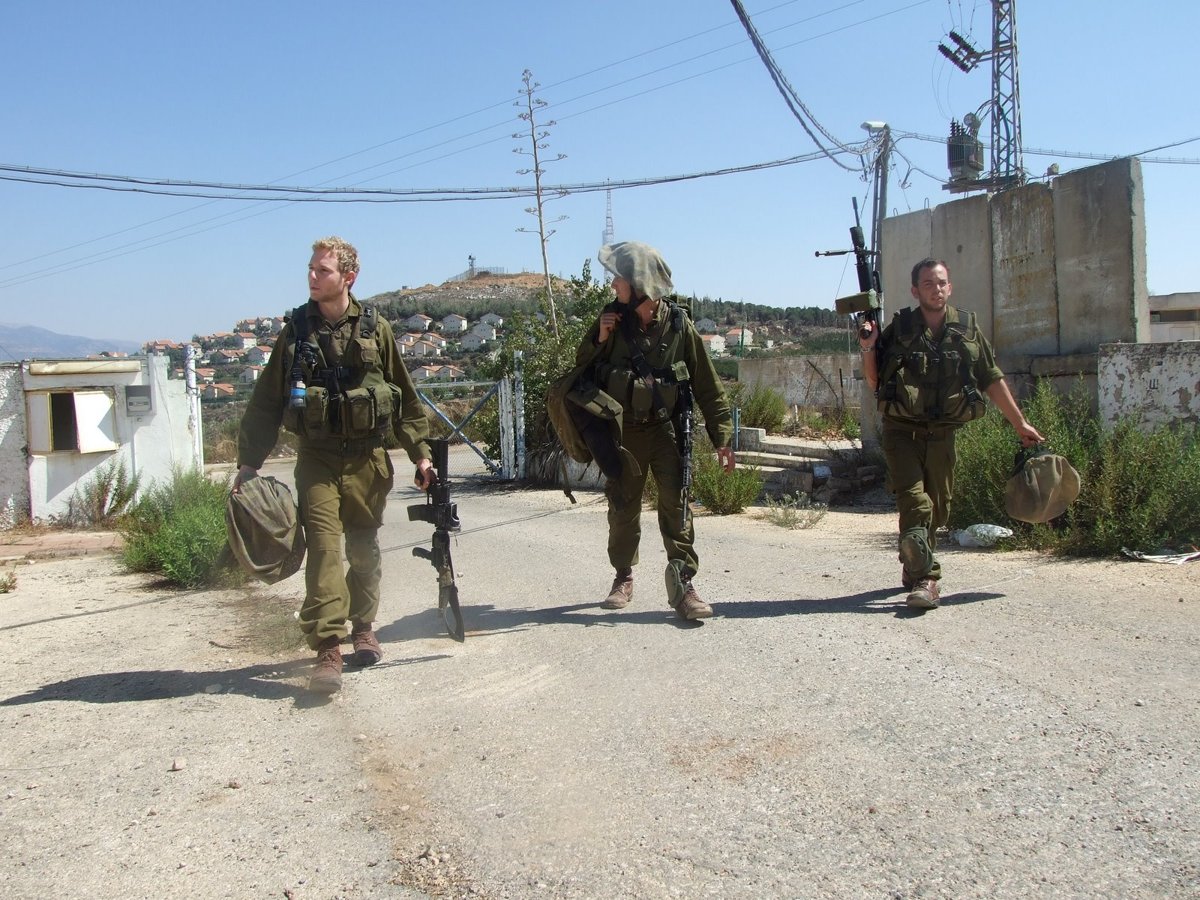
  • The Monochrome Tradition ('Madei Bet'): While most modern militaries use multi-colored digital camouflage, the Israel Defense Forces (IDF) uniquely dresses ground combat troops in solid, unpatterned olive-drab fatigues.
  • The 'Mitznefet' Helmet Silhouette: Soldiers wear a loose, floppy mesh helmet cover that eliminates the distinctive human head outline.
  • Chromatic Harmony with Desert Scrub: Desert Gharqad leaves secrete a waxy, salt-crusted pale film to survive intense solar heat. This gives the plant a distinct dusty gray-green / desaturated olive hue that matches the IDF combat uniform almost identically.
  • Soldiers taking cover behind or within Gharqad thickets organically melt into the terrain, achieving effective optical camouflage against distant observers.
IDF Uniform Camouflage Match
IDF soldiers in monochrome olive-drab uniform and Mitznefet camouflage blending into arid desert scrub.
7

7. Why the Modern Obsession? Political Charters & Scholarly Studies

Where did the worldwide obsession with the Gharqad tree originate?
1. Hamas 1988 Charter: Article 7 of the founding 1988 Hamas charter quoted the Sahih Muslim hadith of the rocks, trees, and the Gharqad. This political citation was broadcast globally by international media (BBC, NYT, Haaretz) and cited by Israeli diplomats, catapulting the Gharqad into global geopolitical discourse.
2. Israeli Academic Research: Middle East analysts and researchers (such as Dr. Mordechai Kedar, Dr. David Cook, and institutes like MEMRI) wrote academic treatises analyzing how contemporary apocalyptic literature teaches the Gharqad narration.
3. Israeli Media Satire: Israeli newspapers (e.g. Haaretz in 2015) ran investigative pieces exploring why millions of Muslims online believed Israelis were planting Gharqad bushes, visiting botanical gardens to photograph the humble desert thorn bush.
4. Social Media Sensationalism: Apocalyptic YouTubers and social media channels weaponized this coverage to produce sensational clickbait videos claiming 'proof of secret Israeli preparations'.

8

8. Scholarly Fiqh: Miracles, Divine Will & Warning Against 'Isqat'

Renowned contemporary scholars, including Dr. Yusuf al-Qaradawi and Dr. Khondokar Abdullah Jahangir (Rahimahullah), established crucial theological balances regarding the Gharqad narration:
1. The speaking of stones and trees is a literal, supernatural miracle (Kharq lil-'Adah) ordained by Allah during Prophet Isa's time; it cannot be simulated or circumvented by botanical engineering today.
2. Trees cannot alter the divine decree (Qadar). The exception of the Gharqad in the hadith denotes that this specific thorn bush will be associated with the army of Dajjal during that apocalyptic engagement.
3. The Muslim must avoid 'Isqat' (arbitrary projection of unverified internet rumors onto sacred texts). Authentic faith rests upon devotion, righteousness, and striving for justice—not chasing internet fables about desert bushes.

۞Referenced Quranic Verses

سُورَةُ الممتحنةAl-Mumtahanah · Surah 60:8

لَّا يَنْهَاكُمُ اللَّهُ عَنِ الَّذِينَ لَمْ يُقَاتِلُوكُمْ فِي الدِّينِ وَلَمْ يُخْرِجُوكُم مِّن دِيَارِكُمْ أَن تَبَرُّوهُمْ وَتُقْسِطُوا إِلَيْهِمْ ۚ إِنَّ اللَّهَ يُحِبُّ الْمُقْسِطِينَ۝8

বাংলা দ্বীনের ব্যাপারে যারা তোমাদের বিরুদ্ধে যুদ্ধ করেনি এবং তোমাদেরকে তোমাদের বাড়িঘর থেকে বের করে দেয়নি, তাদের প্রতি সদয় ব্যবহার করতে এবং তাদের প্রতি ন্যায়বিচার করতে আল্লাহ তোমাদেরকে নিষেধ করেন না। নিশ্চয়ই আল্লাহ ন্যায়পরায়ণদেরকে ভালোবাসেন।

English Allah does not forbid you from those who do not fight you because of religion and do not expel you from your homes — from being righteous toward them and acting justly toward them. Indeed, Allah loves those who act justly.

سُورَةُ الإسراءAl-Isra · Surah 17:104

وَقُلْنَا مِن بَعْدِهِ لِبَنِي إِسْرَائِيلَ اسْكُنُوا الْأَرْضَ فَإِذَا جَاءَ وَعْدُ الْآخِرَةِ جِئْنَا بِكُمْ لَفِيفًا۝104

বাংলা আর এরপর আমরা বনী ইসরাঈলকে বললাম: 'তোমরা এই জমিনে বসবাস করো। অতঃপর যখন পরকালের প্রতিশ্রুত সময় আসবে, তখন আমরা তোমাদের সবাইকে একত্র করে সমবেতভাবে নিয়ে আসব।'

English And We said after him to the Children of Israel, 'Dwell in the land, and when there comes the promise of the Hereafter, We will bring you as a gathered crowd.'

📜Primary Referenced Hadiths

Sahih Muslim #2922Sahih (সহীহ)
Narrated by: Abu Hurairah (রাযিয়াল্লাহু আনহু)· Imam Muslim

لَا تَقُومُ السَّاعَةُ حَتَّى يُقَاتِلَ الْمُسْلِمُونَ الْيَهُودَ، فَيَقْتُلُهُمُ الْمُسْلِمُونَ حَتَّى يَخْتَبِئَ الْيَهُودِيُّ مِنْ وَرَاءِ الْحَجَرِ وَالشَّجَرِ، فَيَقُولُ الْحَجَرُ أَوِ الشَّجَرُ: يَا مُسْلِمُ يَا عَبْدَ اللَّهِ هَذَا يَهُودِيٌّ خَلْفِي فَتَعَالَ فَاقْتُلْهُ، إِلَّا الْغَرْقَدَ، فَإِنَّهُ مِنْ شَجَرِ الْيَهُودِ

বাংলা

কেয়ামত সংঘটিত হবে না যতক্ষণ না মুসলিমরা ইহুদীদের বিরুদ্ধে যুদ্ধ করবে এবং মুসলিমরা তাদের হত্যা করবে। এমনকি ইহুদী যদি পাথর বা গাছের আড়ালে লুকায়, তখন পাথর বা গাছ বলবে: 'হে মুসলিম, হে আল্লাহর বান্দা, এই তো আমার পেছনে একজন ইহুদী রয়েছে, এসো এবং তাকে হত্যা করো।' তবে 'গারকাদ' গাছ ব্যতীত; কেননা তা ইহুদীদের গাছ।

English

The Hour will not be established until the Muslims fight the Jews and the Muslims kill them, until the Jew hides behind rocks and trees, and the rock or tree will say: 'O Muslim, O servant of Allah, this is a Jew behind me, come and kill him' — except the Gharqad, for it is indeed of the trees of the Jews.

Sahih al-Bukhari #2925Sahih (সহীহ)
Narrated by: Abdullah ibn Umar (রাযিয়াল্লাহু আনহুমা)· Imam al-Bukhari

تُقَاتِلُونَ الْيَهُودَ حَتَّى يَخْتَبِيَ أَحَدُهُمْ وَرَاءَ الْحَجَرِ فَيَقُولُ: يَا عَبْدَ اللَّهِ هَذَا يَهُودِيٌّ وَرَائِي فَاقْتُلْهُ

বাংলা

তোমরা ইহুদীদের বিরুদ্ধে যুদ্ধ করবে, এমনকি তাদের কেউ পাথরের আড়ালে লুকালে পাথর বলবে: 'হে আল্লাহর বান্দা, এই তো আমার পেছনে একজন ইহুদী রয়েছে, তাকে হত্যা করো।'

English

You will fight the Jews until one of them hides behind a stone, and the stone will say: 'O servant of Allah, this is a Jew behind me, kill him.'

Sunan Ibn Majah #4077Sahih (সহীহ)
Narrated by: Abu Umamah al-Bahili (রাযিয়াল্লাহু আনহু)· Al-Albani (সহীহ)

فَيَنْزِلُ عِيسَى ابْنُ مَرْيَمَ... فَيُدْرِكُهُ عِنْدَ بَابِ لُدٍّ الشَّرْقِيِّ فَيَقْتُلُهُ، فَيَهْزِمُ اللَّهُ الْيَهُودَ، فَلَا يَبْقَى شَيْءٌ مِمَّا خَلَقَ اللَّهُ يَتَوَارَى بِهِ يَهُودِيٌّ إِلَّا أَنْطَقَ اللَّهُ ذَلِكَ الشَّيْءَ، لَا حَجَرَ وَلَا شَجَرَ وَلَا حَائِطَ وَلَا دَابَّةَ... إِلَّا الْغَرْقَدَةَ فَإِنَّهَا مِنْ شَجَرِهِمْ لَا تَنْطِقُ

বাংলা

অতঃপর ঈসা ইবনে মারিয়াম (আ.) অবতরণ করবেন... এবং বাবে লুদ্দের পূর্ব ফটকে দাজ্জালকে ধরে তাকে হত্যা করবেন। তখন আল্লাহ ইহুদীদের পরাজিত করবেন। আল্লাহর সৃষ্টির এমন কোনো বস্তু অবশিষ্ট থাকবে না যার পেছনে কোনো ইহুদী লুকাবে আর আল্লাহ সেটিকে বাকশক্তি দান করবেন না—পাথর, গাছ, দেয়াল বা জীবজন্তু... কেবল 'গারকাদা' গাছ ছাড়া; কেননা তা তাদের গাছ, তা কথা বলবে না।

English

Then Isa son of Maryam will descend... and catch Dajjal at the eastern gate of Ludd and kill him. Then Allah will defeat the Jews, and there will be nothing left that Allah created behind which a Jew hides except that Allah makes it speak—no rock, tree, wall, or beast... except the Gharqada, for it is of their trees and will not speak.

🗺️

Gharqad Forest Areas, Buffer Zones & Habitat Cartography

MEDITERRANEAN SEA (بحر الروم)GULF OF AQABALake Tiberias (طبريا)DEAD SEA (بحر لوط)-430m · Hyper-Saline🌲 YATIR FOREST (غابة يتير)4M+ Trees · Negev Desert Edge🌿 NEGEV AFFORESTATION BELTDune Stabilization & Perimeter Hedges🧂 NATIVE NITRARIA RETUSASaline Nebkhas & Salt-Bush Hummocks⚔️ Gate of Ludd (Lod)Site of Isa's Victory over Dajjal (Ibn Majah 4077)🕌 Jerusalem (Al-Quds)31.78° N, 35.22° E · EpicenterBeershebaGaza Buffer Zone➜ Historic Origin: Baqi' al-Gharqad24.47° N, 39.61° E · Ancient Gharqad GroveCleared for the historic Muslim cemeteryMap Cartography LegendAfforestation & Hedgerow BeltsNative Saline Nitraria retusaGate of Ludd Victory SiteStrategic & Historical Centers

Cartography: The Gate of Ludd, the Dead Sea saline depressions (native Nitraria retusa habitat), the Yatir Forest & Negev buffer afforestation belt, and the historic Baqi' al-Gharqad grove in Madinah.

Baqi' al-Gharqad (Madinah)

Historic Madinah cemetery originally overgrown with ancient Gharqad forest
📍 24.467° N, 39.615° E

Named after the thickets of Gharqad thorns that grew there before the Prophet ﷺ designated it as a burial ground.

View on Satellite Map ↗

Gate of Ludd (Lod, Palestine)

Eschatological site where Isa (AS) terminates Dajjal (Ibn Majah 4077)
📍 31.95° N, 34.89° E

Ancient city in Palestine near modern Tel Aviv's Ben Gurion Airport where the final confrontation culminates.

View on Satellite Map ↗

Yatir Forest & Southern Negev Edge

Largest planted forest in Israel (over 4 million trees) on desert border
📍 31.345° N, 35.056° E

Massive afforestation zone on the slopes of Mount Hebron and northern Negev, serving as living green barriers.

View on Satellite Map ↗

Dead Sea Depression (Salt Flats)

Primary natural botanical habitat of halophytic Nitraria retusa
📍 31.5° N, 35.45° E

Hyper-arid, highly saline soil where indigenous desert boxthorn and salt-bush shrubs anchor sand nebkhas.

View on Satellite Map ↗

Northern Negev Buffer & Kibbutz Perimeters

Active afforestation belts and drought-hardy thorny security hedgerows
📍 31.25° N, 34.79° E

Extensive plantings of Lycium shawii and desert shrubs utilized for dune stabilization and security fencing.

View on Satellite Map ↗

Jerusalem / Al-Quds

Focal epicenter of eschatological events and siege
📍 31.776° N, 35.234° E

The sacred city besieged by Dajjal's army before the descent of Prophet Isa (AS).

View on Satellite Map ↗
⚖️

Myth vs. Fact Breakdown: The Gharqad Tree

Contrasting popular internet assertions with verified prophetic hadiths.

❌ Claim #1

The Israeli government is secretly planting millions of Gharqad trees all across Israel and West Bank settlements to hide behind.

✅ Scriptural Fact

Empirical afforestation data (KKL-JNF) confirms that over 90% of trees planted in Israel are Aleppo pines, cypresses, and eucalyptus. Gharqad (Nitraria retusa) is an uncultivated, low desert thorn bush that grows wild in saline arid badlands, with zero commercial or landscaping use.

❌ Claim #2

The Gharqad Hadith mandates indiscriminate attacks on Jewish civilians anywhere at any time.

✅ Scriptural Fact

Classical scholars (Ibn Hajar, Al-Nawawi, Ibn Kathir) unanimously explain that this event belongs strictly to the apocalyptic war led by Prophet Isa (AS) against the armed legions of the False Messiah (Dajjal). Normal civilian relations are governed by Quran 60:8 (justice and kindness).

❌ Claim #3

The Gharqad tree is a mysterious, rare plant found exclusively in modern Israel.

✅ Scriptural Fact

It is a standard halophytic desert bush native across the entire Middle East, including Egypt, Jordan, and Saudi Arabia. Madinah's sacred cemetery 'Baqi' al-Gharqad' was named after the very same wild Gharqad thickets that originally covered the land.